

 See My Latest Article on HelloNation

Hearing changes are often gradual, which makes them easy to dismiss. A person may first notice that conversations seem unclear, the television volume keeps rising, or background noise makes familiar voices difficult to follow. These are reasonable signs to have hearing evaluated by an audiologist rather than waiting for communication problems to become more disruptive.
What does an audiologist do?
An audiologist is a licensed hearing and balance specialist who evaluates people of all ages. Audiologists can identify the type and degree of hearing loss, assess tinnitus and balance concerns, explain test results, and help determine what forms of communication support may be appropriate.
A hearing evaluation is more detailed than simply deciding whether someone can hear a loud sound. Testing may examine:
- How softly a person hears different pitches
- Whether each ear hears equally well
- How clearly speech is understood
- Whether hearing changes in quiet and noisy conditions
- How the outer, middle, and inner ear may be functioning
Results are commonly shown on an audiogram, a chart that helps describe hearing sensitivity across different pitches. The findings can also help distinguish a possible hearing problem from concerns involving ear blockage, infection, medication effects, or other medical conditions.
Which everyday signs suggest it is time for a hearing evaluation?
Repeated communication difficulties are among the clearest reasons to see an audiologist. Consider an evaluation if any of these situations occur regularly:
- Asking people to repeat themselves
- Frequently misunderstanding words, especially when several people are talking
- Finding it difficult to follow conversation in restaurants, meetings, worship services, classrooms, or family gatherings
- Turning up the television, radio, or phone volume higher than others prefer
- Hearing that people seem to mumble
- Struggling to understand speech over the telephone
- Relying more heavily on lip-reading or watching facial expressions
- Missing doorbells, timers, alarms, or approaching vehicles
- Avoiding social situations because listening has become tiring
- Feeling that one ear hears better than the other
Hearing loss does not always make sounds seem quiet. In some cases, sounds are audible but speech is difficult to understand, particularly when background noise is present. A person may hear that someone is talking without being able to make out the words.
Family members sometimes notice these changes before the individual does. Comments such as “you never hear me” or “the volume is too loud” may reflect a real communication pattern rather than impatience.
Should ringing in the ears be evaluated?
Yes. Ringing, buzzing, humming, roaring, or beeping in one or both ears is called tinnitus. It may occur briefly after loud noise, but persistent or recurring tinnitus deserves attention, especially if it affects sleep, concentration, mood, or communication.
An audiologist can assess hearing and ask about the timing, pitch, loudness, and pattern of the sound. Tinnitus may occur with hearing loss, noise exposure, ear blockage, medication effects, or other conditions. It is a symptom, not a diagnosis by itself.
Pulsing or heartbeat-like noise is different from ordinary ringing and should receive prompt medical attention. Tinnitus accompanied by sudden hearing change, severe dizziness, weakness, or other new neurological symptoms also requires urgent evaluation.
When is hearing loss an emergency?
Sudden hearing loss should not be treated as a routine issue. A rapid change in hearing over hours or a few days—particularly in one ear—requires urgent medical evaluation. Treatment for some causes is time-sensitive, so waiting to see whether the hearing returns can reduce available options.
Prompt medical attention is also appropriate for:
- New hearing loss after a head injury
- Severe ear pain
- Fluid, blood, or pus draining from the ear
- Sudden or intense dizziness
- New facial weakness or numbness
- Hearing that worsens quickly
- A foreign object in the ear
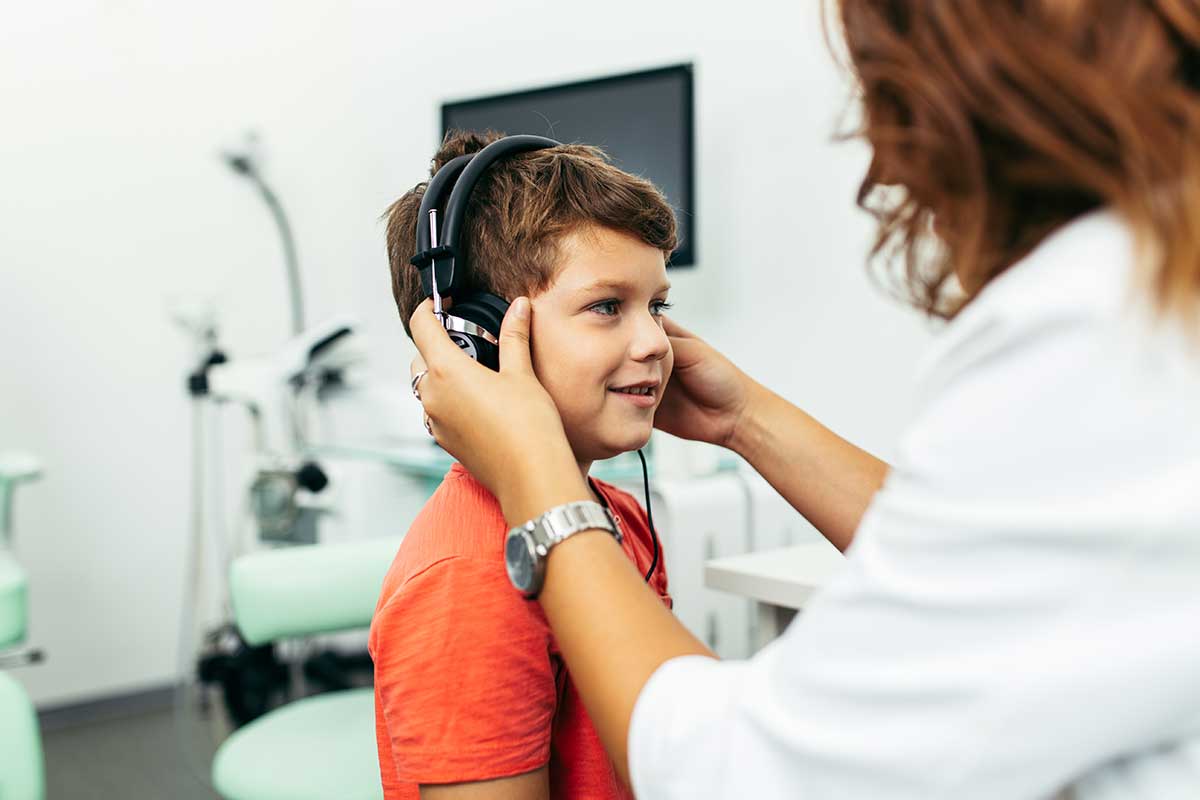
An audiologist may be part of the evaluation, but sudden or medically concerning symptoms may also require an urgent-care setting or a physician who treats conditions of the ear, nose, and throat.
Do children need an audiologist even if they passed an earlier screening?
They may. Hearing can change after newborn or school screenings, and some children have difficulty hearing only in certain situations. Signs worth checking include delayed speech or language, unclear speech, frequent requests for repetition, difficulty following directions, inattentiveness in class, unusually loud speaking, or strong reactions to certain sounds.
A child who often watches a speaker’s face, seems not to respond when called, or performs better when close to the teacher may be compensating for reduced hearing. In younger children, changes in behavior or communication may be more noticeable than a direct complaint about hearing.
Hearing affects speech, language, learning, and social development. An evaluation can clarify whether the concern involves hearing sensitivity, middle-ear fluid, listening in noise, attention, or another issue.
Who should consider a baseline hearing test?
A baseline test can be useful even when hearing problems are not obvious. It creates a comparison point for future changes and may be especially reasonable for people who:
- Work around machinery, construction equipment, firearms, engines, or amplified sound
- Regularly use power tools or outdoor equipment
- Have a history of repeated ear infections or ear surgery
- Take medications known to affect hearing
- Have received certain chemotherapy or radiation treatments
- Have a family history of hearing loss
- Notice tinnitus after noise exposure
- Are approaching older adulthood and have not had hearing checked
Seasonal activities can matter locally. Outdoor equipment, hunting-related noise, farm machinery, home renovations, and loud indoor gatherings may expose residents to sound levels capable of damaging hearing. Hearing protection helps, but it does not replace an evaluation when symptoms are already present.
Is hearing loss just part of getting older?
Age-related hearing change is common, but it should not automatically be ignored. Some degree of hearing difficulty may develop over time, yet communication problems can often be assessed and managed. Treatable conditions, including earwax blockage or middle-ear problems, can resemble age-related hearing loss.
An evaluation also helps identify whether hearing is reduced in one ear, affects certain pitches, or is interfering with daily activities. These details matter because different patterns can point toward different next steps.
Waiting until hearing is “bad enough” may lead to unnecessary frustration. People often adapt by avoiding group conversations, guessing at missed words, or depending on family members to repeat information. Recognizing the pattern early provides a clearer understanding of what is happening.
What should someone bring to a hearing evaluation?
Useful information includes when the change began, whether it affects one or both ears, and whether it fluctuates. It also helps to mention tinnitus, dizziness, ear pain, noise exposure, previous ear problems, family history, and medications.
If possible, bring questions about specific listening situations, such as conversations in a vehicle, family gatherings, telephone calls, or workplace noise. Hearing ability is not only about test tones; it is also about how well a person communicates in everyday settings.
For Lebanon residents, the most practical rule is simple: persistent communication difficulty, recurring tinnitus, unequal hearing between the ears, or concern from family members is enough reason to arrange a hearing evaluation. Sudden hearing loss, drainage, severe pain, or neurological symptoms should be handled urgently rather than monitored at home.